

Muscle growth requires more than training because it needs additional elements for development. Resistance exercise functions as the primary driver that causes muscle growth, but the body needs recovery time to support muscle development. The body requires rest days to conduct three functions, which include muscle repair and adaptation and strength-building after it experiences physical stress. The body needs sufficient rest time because muscle development needs it, while insufficient rest increases the chance of injuries.
The article demonstrates the necessity of rest days for muscle growth while it shows how effective recovery methods enhance strength performance and consistent training over time.
Understanding Muscle Growth
Muscle growth exists when muscles gain size through resistance training because muscle fibers respond to the resistance stimulus. Exercise causes muscle fibers to sustain tiny injuries which result from two factors: mechanical tension and metabolic stress. The body uses the damage as a signal to start repairing the fibers, which results in their growth of both thickness and strength.
The workout itself does not create the repair process. The repair process takes place during rest periods, which include recovery time. Muscles require recovery time to achieve complete repair and growth.
The Role of Muscle Recovery
Multiple biological processes drive muscle recovery because they require both protein synthesis and inflammation control together with energy restoration. The body boosts protein synthesis after training sessions to mend the broken muscle fibers.
The rest days enable the body to recover through training by providing necessary recovery time. The body needs rest after continuous training because it disrupts muscle recovery thus decreasing workout benefits and hindering muscle development.
Muscle Protein Synthesis and Rest
The body uses muscle protein synthesis to create new muscle tissue. Resistance training increases this process, which continues for 48 hours or more depending on the intensity of training and the individual’s experience level.
Rest days allow muscle protein synthesis to exceed muscle breakdown. When recovery is insufficient, muscle breakdown may exceed synthesis, leading to stagnation or muscle loss.
Adequate rest allows the body to attain a muscle protein balance that helps in muscle building.
Central Nervous System Recovery
The concept of resistance training imposes physiological stresses on the body that influence muscle tissue as well as central nervous system functions. The central nervous system is responsible for controlling three basic motor functions, which are muscle contraction, movement, and muscle strength.
The state of nervous exhaustion occurs when athletes engage in intense training without any breaks or rest periods. The state causes symptoms that lead to a loss of strength, slow reaction times, and a lack of ability to engage in physical exercises.
The central nervous system needs rest days to aid in recovery and improve training performance.
Hormonal Balance and Muscle Growth
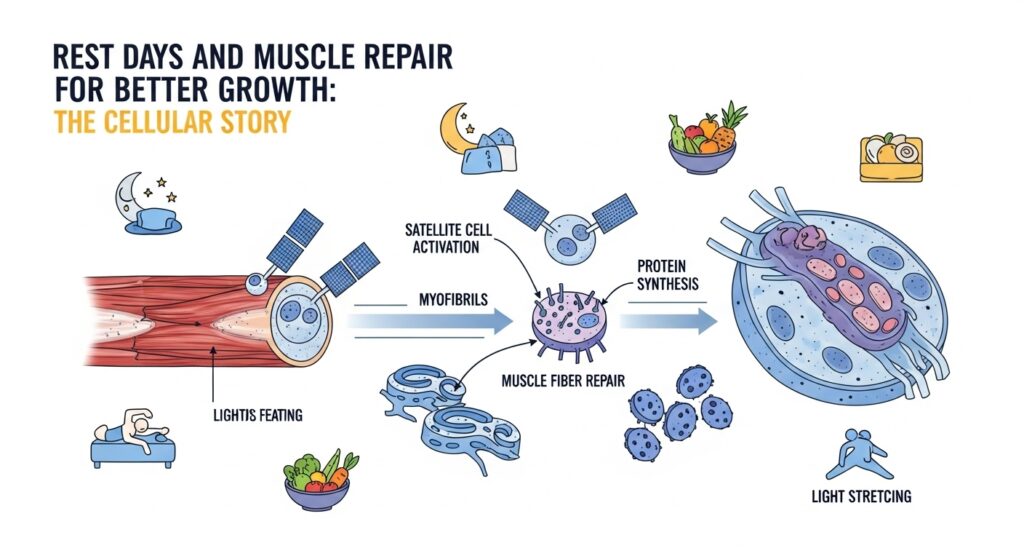
Hormonal Balance and Muscle Growth The process of muscle development requires hormonal activity, which controls the growth of muscles in the body. The body uses testosterone together with growth hormone and insulin-like growth factor to repair and build muscle tissue.
When athletes fail to rest on their day off, their body will increase cortisol production in response to excessive training. The stress hormone cortisol causes muscle damage when it remains elevated in the body for an extended time period.
Rest days help maintain hormonal balance by reducing stress and supporting anabolic hormone production.
Preventing Overtraining
Athletes start overtraining when they try to undertake training that is beyond their physical capacity to recover from. The aspect of overtraining leads to several adverse effects that affect muscle growth, athletic performance, and overall health.
Athletes undergoing overtraining have similar symptoms, which include persistent fatigue, decreased physical strength, poor sleep, and increased susceptibility to injuries.
Rest days act as stress relief for training, which enables athletes to stick to their training program while they accomplish their fitness goals in a year.
The risk of injury increases because muscle fatigue and tissue stress become severe. Individuals undergoing training without observing proper rest days suffer from damage to their connective tissues and joints and muscles that stabilize them.
Muscles require rest to recover their muscles, ligaments, tendons, and joints. This process helps to reduce the risk of experiencing strains and tears and developing overuse injuries.
Injury prevention allows athletes to stick to their training program while increasing their muscle strength.
Energy System Restoration
Muscle glycogen serves as the main energy source, which gets depleted during high-intensity exercise training that resistance training requires. The process of restoring glycogen to normal levels requires both time and appropriate food intake.
Rest days enable the body to restore glycogen levels, which allows muscles to maintain energy reserves for upcoming training sessions. The training process, which involves using energy reserves that result from fatigue, leads to performance decline and fatigue increase.
Muscle growth depends on energy restoration, which serves as a vital element in the process.
Sleep and Rest Days
The body requires sleep because it functions as a vital link needed for recovery purposes. Sleep activates growth hormone production, which aids in tissue repair.
The combination of rest days and quality sleep is an efficient way to enhance recovery. The lack of sleep in individuals translates to a low level of muscle repair, thereby increasing their training stress.
Sleeping patterns contribute to muscle recovery and hormonal regulation.
The complete rest requirements for rest days include no activity at all, except in certain cases. Active rest activities include low-intensity movements that aid in blood flow and low muscle stress.
The activities include walking, stretching, mobility exercises, and yoga. Active rest activities aid in the delivery of nutrients to the muscles while also reducing stiffness in the muscles.
The correct application of both active rest and complete rest methods leads to muscle recovery.
The training frequency of a person determines their required rest days for recovery. Beginners need extra recovery time between workouts, while experienced trainers can handle more frequent workouts when they follow suitable training plans.
The body requires 48 to 72 hours of rest to recover from heavy resistance training. The human body requires adequate time to recover after people undergo different muscle exercises and take their recovery days.
The training programs should correspond with the recovery capacities of the individuals.
The study examines the effects of rest days on training performance.
The effectiveness of recovery is directly linked to performance improvements. The body develops strength and endurance and power through complete muscle and nervous system recovery.
Training without rest days leads to performance levels that remain unchanged. The benefits that rest days provide help athletes prepare for training while enhancing their performance during workouts.
Regular recovery activities support the principle of progressive overload, which demonstrates how muscles change through time.
Nutrition and Rest Days
The reason for rest days exists because nutrition serves as a fundamental reason. The body needs protein to build muscles, which should be followed by carbohydrates that support glycogen restoration.
Hydration with micronutrient consumption enables cells to restore their ability to heal. Rest days combined with proper dietary choices enable individuals to achieve maximum muscle development results.
Bodybuilders need to maintain a balanced diet during their rest days because this period represents their most effective time to build muscles.
Cells need hydration and micronutrient intake to complete their recovery processes. Rest days combined with proper dietary choices enable individuals to achieve maximum muscle development results.
Bodybuilders need to maintain a balanced diet during their rest days because this period serves as their most effective time for muscle development.
Psychological Recovery
Mental exhaustion decreases both training frequency and athletic motivation. Doing continuous workouts without taking breaks may result in total physical and mental exhaustion.
The mental recovery process from rest days helps to improve the concentration level during training and the ability to adhere to fitness programs. Mental well-being helps in muscle growth.
Balanced training schedules lead to better recovery effects on both the physical body and mental state.
Rest Days for Different Training Goals
Rest requirements differ according to the specific training objectives. Athletes who perform strength and hypertrophy training need more time to recover than those who engage in endurance training.
Athletes require extra rest days when they participate in programs that involve either high training volume or high training intensity. The use of customized recovery approaches leads to better training performance results.
Rest schedules become more effective when athletes understand their training requirements.
Rest days are beneficial for all individuals who participate in physical fitness activities. Rest days are important for beginners because they allow their bodies to adapt to the new exercises, while experienced individuals require rest days to maintain their performance.
Individuals who are athletes and participate in competitions, bodybuilders who perform weightlifting, and individuals who have physically demanding jobs benefit greatly from observing rest days.
Rest days enable every person to achieve sustainable muscle development through their usage.
Common Myths About Rest Days
People believe that taking rest days makes their progress slower, but this belief is not accurate. People who do not take enough rest will find their muscle development process becomes restricted.
Another myth is that people who experience muscle soreness after workouts have completed their training session. When someone experiences muscle soreness for an extended period, it indicates they have not properly recovered from their workout.
Training results and decisions about training methods improve when people understand how rest periods function.
How Many Rest Days Are Needed
The number of rest days necessary for training depends on three factors, which include training intensity, training volume, and individual recovery capacity. Most training programs include one to three rest days per week.
The procedure for identifying appropriate resting intervals entails two techniques, which involve monitoring the physical signs and evaluating performance levels.
Muscle growth and training sustainability are positively affected by individualized resting cycles.
Conclusion
Rest days are crucial for muscle growth, as they allow for the necessary time for muscle repair and nervous system recovery. Muscle recovery from training results in muscle growth, as training acts as the first muscle growth trigger.
https://shaintool.com/stability-exercises-for-better-movement/
The use of scheduled rest days prevents injuries and overtraining while assisting athletes in continuing their growth in performance. Muscle growth involves training that requires both the use of scheduled workout sessions and the necessary time for recovery.