It does not always require heavy weights and a gym to build muscles. Building muscles is very much possible with alternative training methods that incorporate time under tension, proper exercise selection, and progressive overload. Many people have developed strength and muscle mass with bodyweight exercises, resistance bands, and lighter loads in controlled motion patterns. This works quite well for beginners, home trainers, those with joint issues, and others who do not have access to heavy weights and equipment.
The article will explain the process of muscle growth, effective means of building muscles without heavy weights, and how to construct a safe and productive training program.
Understanding Muscle Growth
The growth of the muscles, also known as hypertrophy, is the state when muscles experience stress. This does not always require heavy weights. However, the muscles respond to tension, metabolic pressure, and damage. It is worth noting that the muscles are made of fibers. The growth of the muscles is due to the response of the muscles to the applied stress.
Key factors that influence muscle growth:
- Training Intensity and Volume
- Time under tension
- Exercise variety and progression
- Adequate Recovery and Nutrition
With these principles, muscles develop without the assistance of heavy weights.
Benefits of Building Muscle without Using Heavy Weights
The advantages of training without heavy weights:
- The training method reduces stress on both joints and connective tissues.
- The training method decreases the possibility of sustaining injuries.
- The training programs become more accessible through their expanded availability.
- The system provides enhanced control and stability to all movements.
- The exercise program provides an appropriate solution for people who want to work out at home.
- The fitness and muscle development process becomes sustainable through these advantages.
Bodyweight Training: A Real Way to Grow Muscles
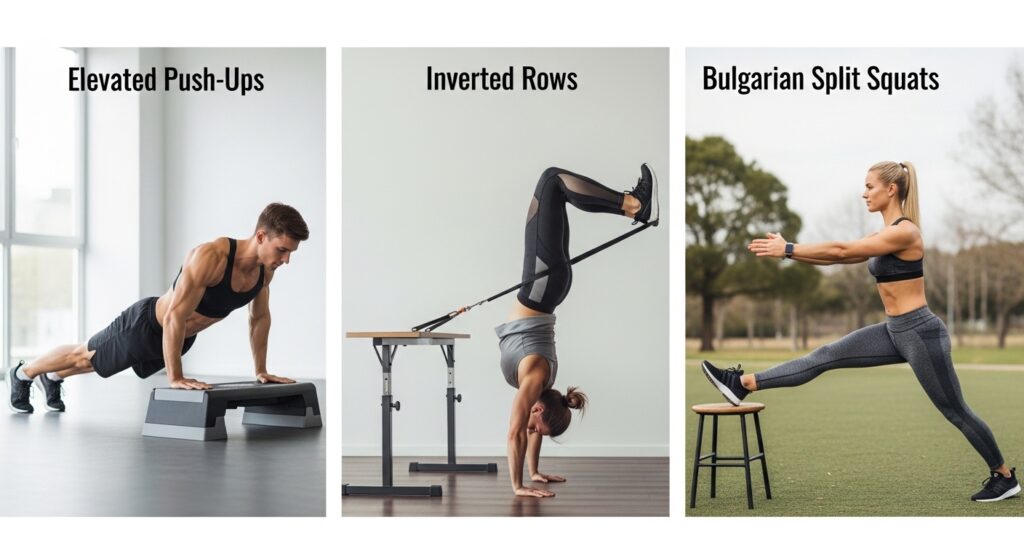
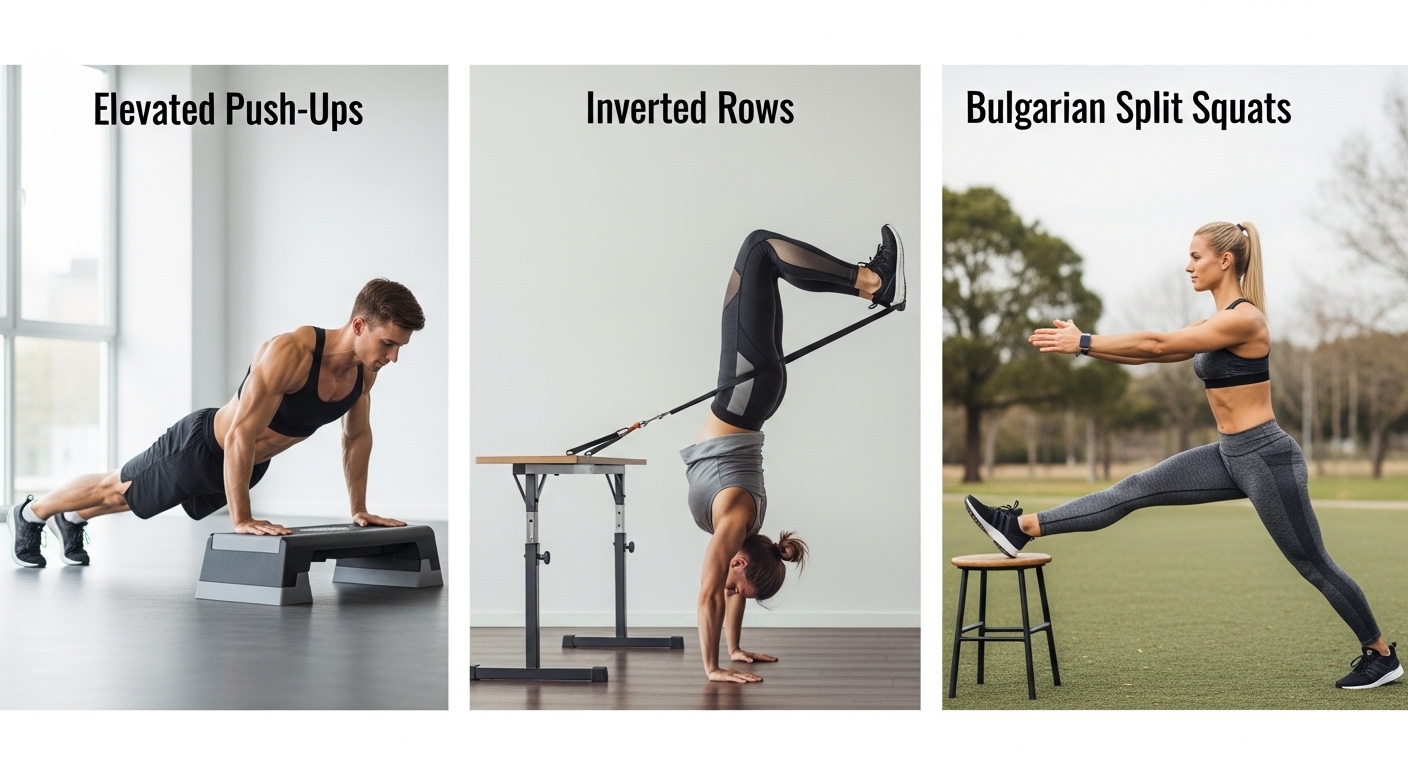
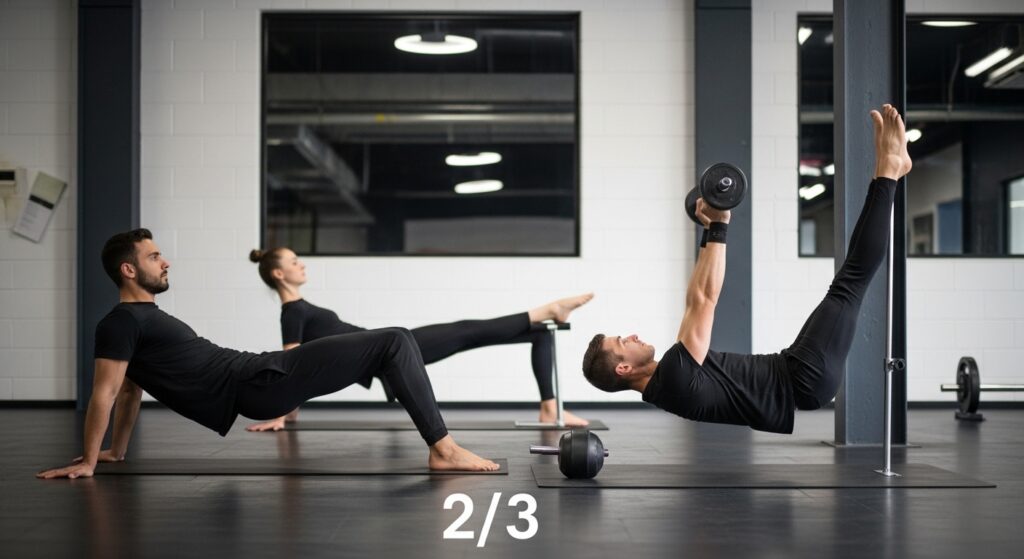
Bodyweight training is among the most effective techniques to build muscles without using heavy weights. When exercises are progressed correctly, a great load of resistance can be provided by body weight movement.
Some effective bodyweight exercises include:
- Push-ups and variations
- Pull-ups and inverted rows
- squats, and lunges
- Glute bridges and hip thrusts
- Planks and core exercises
Progressive overload is achieved by increasing difficulty through variations, tempo control, and range of motion.
Using Resistance Bands
Resistance bands have varying levels of tension, which makes them so effective in building muscles. They are light, cheaper, and versatile.
Resistance Band Exercises Include:
- Band squats and presses
- Rows and pull-aparts
- Bicep curls and triceps extensions
- Lateral walks and glute activation drills
Bands are stretched and increase tension as they are stretched, keeping the muscle activated throughout the movement.
Time Under Tension and Muscle Growth
Time under tension is defined as the amount of time a muscle is under tension throughout a set. Time under tension can be increased to raise muscle activation and metabolism.
Ways to increase time under tension include:
- Slowing Down Repetitions
- Pausing at bottom or top of movements
- Performing Isometric Holds
For instance, performing slow push-ups with a pause at the bottom involves significant muscle activation.
High Repetition Training
Repetitive training with little weight, in this case, can induce hypertrophy if the sets are conducted almost at fatigue. A presentation suggests that hypertrophy is achievable in a very wide range of repetitions with proper intensity.
12-25 repetitions for every set test the strength of the endurance fibers and create metabolic stress that promotes muscle building, yet does not utilize heavy weight.
Progressive Overload Without Heavy Weights
Progressive overload is still necessary, even without weights. This does not mean that any progress is achieved by using heavier weights, however.
Progression strategies are:
- Increasing repetitions or sets
- Reducing rest time
- Advancement of exercise variations
- Improving control and range of movements
This enables the continuous adaptation of muscles.
Training Frequency and Volume
Muscle growth is affected by the frequency and amount of training. For most people, it is effective to train a particular muscle group two to three times a week.
“Moderate volume with consistent progression results in better outcomes than excessive training. Allowing sufficient recovery between sessions will result in muscle repair and building.”
Importance of Full Range of Motion
Using the full range of motion for exercise increases the level of muscle activation and overall flexibility. Partial repetitions do not fully engage the muscles and are not very effective.
Controlled movements through a full range of motion enable proper muscle coordination, joint functions, and strength building.
Isometric training for muscle strength
Isometric exercises are those which require an individual to keep a certain position or make little or no movement, but are still under tension. These exercises are beneficial in improving muscle
Such exercises include wall sits, planks, stationary lunges, and isometric push-ups. Isometric training is especially beneficial during a situation of limited facility.
Combining Cardio and Muscle Building
Cardio exercises may help in building muscles with proper planning and inclusion of strength training. Some examples of cardio exercises include climbing stairs, sprint intervals, rowing, etc.
The intensity of the cardio activities must be balanced so that muscle recovery is not neglected.
Nutrition for Muscle Growth without Heavy Weights
Nutrients are essential for building muscles. Protein acts as fuel for repairing the muscles, while carbs provide the required energy during training.
Key nutritional factors:
- Sufficient daily protein
- Balanced Calorie Intake
- Proper hydration
A consistent form of nutrition is required to support training adaptations and muscle growth.
Recovery and Sleep
Muscle building takes place during the recovery period and not during the workout sessions. Sleep, rest, and active recovery sessions are crucial.
Also, recovery can affect muscle development, especially when it is inadequate. Sleep and stress, on the other hand, can assist with training.
It results in better outcomes and safety.
Common mistakes include:
- Training to failure per workout session
- Ignoring good technique
- Skipping Recovery
- Lack of Progression
The Balancing intensity with recovery points to sustainable muscle development.
Building Muscle at Home
Home users can achieve effective muscle development through this method which requires no heavy weight training equipment. Home workouts become effective through body weight exercises and resistance band training as their most effective exercise methods
Consistency and structured programming are more important than the availability of equipment.
Creating An Effective Training Program
An effective muscle-building program incorporates:
- Compound movements
- Progressive overload strategies
- Adequate volume and frequency
- Planned recovery
Constant adjustment of exercises and intensity helps to ensure continuous progress.
Who Can Benefit from this Training Style
This approach is suitable for:
- Beginners
- Individuals with Joint Concerns
- Older adults
- Home workout enthusiasts
It gives an individual a safe means of accessing muscle formation.
Long-Term Muscle Growth Without Heavy Weights
There are a number of other benefits associated with building muscle without using heavy weights, but it requires a patient approach on a consistent basis to achieve gradual results that
In order for the success to continue over time, it is necessary to continue with the progressive overload, with adequate recovery strategies, and proper nutrition.
Conclusion
It is an effective and convenient solution to develop muscles without the use of heavy weights. Resistance bands, time under tension, repetitions, and progressive overload are all methods that can be employed to develop muscles through bodyweight exercises. The joints will experience much less stress and movement will become much more efficient.
Because the emphasis is on technique, recovery, and nutrition, muscles develop without requiring heavy weights. Results in long-term strength and physical fitness improvements as a result of a structured training program.