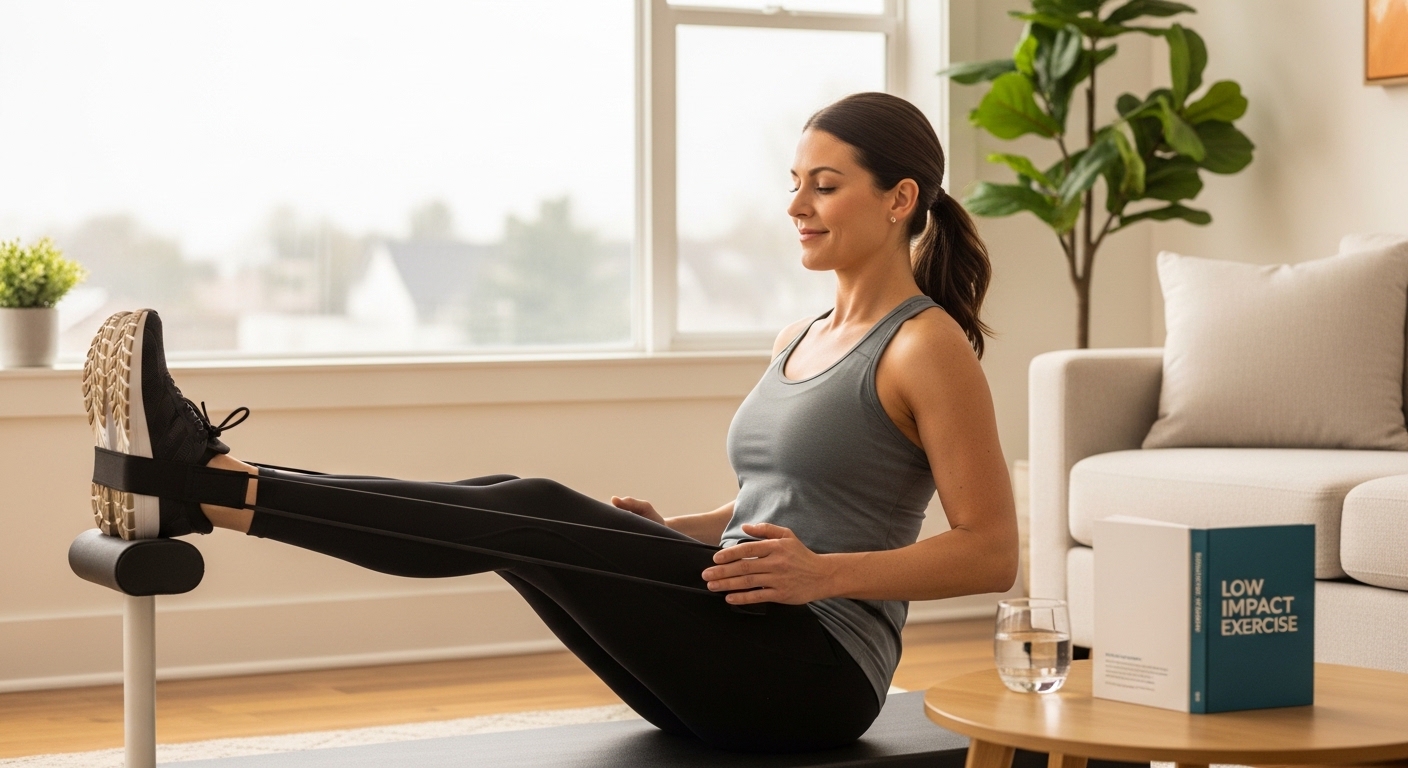
Knee pain is a very common issue among individuals across various age groups. Knee pain is often due to factors such as aging, being overweight, injuries, arthritis, weak knee muscles, or a non-accommodating lifestyle. Severe exercise may exacerbate knee aches, but effective low-impact workouts may actually alleviate a person’s knee pain. The good news is that with low-impact workouts, one can alleviate knee pain from the comfort of their own home.
In this write-up, you will learn about the benefits of low-impact exercises on knee pain, exercises you can do, and tips to keep you going while exercising.
Understanding Knee Pain and Exercises
The knee is a complex joint, and a significant portion of our body weight rests in its area. Weaker muscles in that region, such as those in the quadriceps, hamstrings, and glutes, put more stress on a person, and without movement, more stiffness and pain will occur.
Exercises like low-impact workouts help strengthen the muscles without putting too much strain on the knee joint. Such exercises help stabilize the joint, circulate blood, and improve flexibility. This reduces the discomfort and the risk of further injury.
Benefits of Low-Impact Workouts for Knee Pain
Low-impact exercises provide several advantages to individuals with knee issues:
- Lowered joint stress when compared with high-impact activities
- Increased muscle strength in the knee
- Improved joint stability and balance
- Increased flexibility and range of motion
- Improved Blood Flow and Reduced Stiffness
- Lower risk of injury
Consistent engagement in low-impact exercise may be beneficial in controlling knee pain.
Why Home Workouts Are Ideal for Knee Pain
On the other hand, home workouts allow a comfortable environment. You have the freedom to do things at your own pace, avoid the crowds in the gym, and stop immediately if uncomfortable. You also have the advantage of being consistent, as consistency is a key to healthy knees.
With little space and no equipment at all, exercises can be easily incorporated into daily activities.
Safety Guidelines Before Starting
Note:
Before engaging in any light exercises to help relieve aching knees, you must observe the following safety tips:
- Warm up for 5-10 minutes before exercising
- Avoid actions that make pain sharper or worse
- Muscular movement should be slow and controlled
- Maintain proper posture and alignment
- Breathe normally during exercises
- Stop immediately if the pain increases
In case of severe knee pain and/or any medical condition, it’s always advised to seek the advice of a medical professional.
Warm-Up Exercises for Knee Pain
A proper warm-up helps in the preparation of the muscles and joints for movement while minimizing the risk of injury.
Marching in Place
March slowly with knees lifted only as high as comfortable.
Ankle Circles
Rotating your ankles in different directions will help in increasing joint flexibility, especially for your lower legs.
Seated Knee Extensions
Sit down in a chair and slowly extend each of your legs individually. This exercises your quadriceps muscles without stressing your knee.
Best Low-Impact Exercises for Knee Pain that You Can Do at Home
These exercises help strengthen the knee supports without straining the knee joint itself.
Straight Leg Raises
Straight leg raises help build strength in the quadriceps, which is crucial for knee stability.
How to do it:
Position your body in a lying-down stance with one knee folded and the other leg stretched out. Carefully lift the stretched leg up to the folded knee, and finally, lower it.
Benefits:
- Strengthens quadriceps
- Reduces knee joint pressures Improves stability
Chair Squats
Chair squats develop strength in the legs, especially in controlling the depth of the movement.
How to do it:
Stand in front of a chair and slowly lower yourself until you touch the seat very lightly, then go back up.
Benefits:
- Strengthens the thighs and glutes
- Improves Knee Control
- Supports Daily Movements
Wall Sits
Wall sits are effective in building muscle endurance without any movement of the joint.
How to do it:
Arranging your back against a wall and sliding your back somewhat into a seated position, you may hold the position for some time.
Benefits:
Strengthens Quadriceps Improves knee support Low joint impact
Glute Bridges
Strong glutes ease the tension in the knees.
How to do it:
Lie back on a flat floor with your knees bent and feet flat, and lift up towards the ceiling, squeezing your glutes and moving slowly.
Benefits:
- Strengthens glutes and hamstrings
- It improves lower body alignment
- Reduces knee strain
Standing Hamstring Curls
Hamstring curls are used for building muscle in the hamstring region.
How to do it:
Stand while holding a chair to support yourself. Slowly bend the knee to bring the heel towards the glutes and back down.
Advantages:
- Improves knee balance
- Improves joint stability
- Improves muscle control
Step-Back Lunges
Modified lunges help relieve pressure from the knees and strengthen muscles.
How to Do It:
- Instead, take a step backward with one foot, slightly lowering the body.
- Benefits: Strengthens the legs safety Enhances balancing Reduces stress to the knees going forward
- Low-Impact Cardio Exercises for Knee Pain
Cardio workouts without high impact improve blood flow and overall fitness.
Walking in Place
This controlled flow aids in enhancing blood flow and joint lubrication.
Seated Cardio Exercises
Seated leg lifts and arm movements are also great options to raise your heart rate without putting pressure on your knee.
Marching Side to Side
Gently shift your weight from side to side for improvement with balance and mobility.
Stretching Exercises to Relieve Knee Pain
Stretching prevents stiffness and increases flexibility.
Quadriceps Stretch
Stand and, with support, gently pull one foot toward the glutes.
Hamstring Stretch
Sit on the chair and lift your leg in front of you, with a slight lean to feel the gentle stretch of your upper inner thigh muscles.
Calf Stretch
Stand facing a wall and press one heel into the floor.
Stretching should be slow and not cause any kind of pain.
Sample Low-Impact Knee Workout Routine at Home
Here is a basic routine, which can be followed by beginners:
- Marching in place – 3 minutes
- Straight Leg Raises – 2 sets of 10 repetitions per leg
- Chair squats—2 sets, 8 to 10
- Glute Bridges – 2 sets of 10 reps
- Standing hamstring curls – 2 sets of 10 reps per leg
- Gentle stretching – 5 minutes
This routine can be done 3 to 5 times a week.
Common Mistakes to Avoid
Avoid these errors to protect your knees:
- Skipping warm-ups
- Locking the knees in exercises
- Moving too fast
- Ignoring Pain Signals
- Making high-impact movements
The appropriate forms and necessary patience are essential for a safe progression.
How Often Should You Exercise with Knee Pain?
The intensity is not as important as the consistency. Low-intensity exercises can be followed every day of the week depending upon individual comfort.
For a beginner, they might start with 3 sessions per week but then increase the number of sessions appropriately. There should also be rest days when experiencing any soreness.
Lifestyle Tips to Support Knee Health
“Exercise works best in conjunction with healthy habits.”
- Maintain a healthy body weight
- Wear supportive footwear
- Stay hydrated
- Avoid Prolonged Sitting
- Good Posture in Daily Activities
Such behaviors decrease the strain on the knee joints.
Who Can Benefit from Low-Impact Knee Exercises
Low-impact workouts are appropriate for:
- Older Adults
- Beginners
- People with Arthritis
- Persons recovering from minor knee injuries
- Anyone with any form of knee discomfort
They are a safe way to keep active when suffering from pain.
Long-Term Benefits of Low-Impact Exercises for Knee Pain
Thus, with consistent practice, such exercises tend to increase the strength of muscles, enhance the stability of joints, and improve mobility. Subsequently, pain diminishes, and individuals tend to build confidence in improving motor skills.
Conclusion
Doing low-impact exercises to help with knee pain at home is a good way to stay physically active while your knees heal. Some low-impact exercises help in reducing knee pain while improving your flexibility. These types of exercises gradually and gently stress the knee joint.
Therefore, consistency, proper techniques, and tuning into your own body are important. Home exercises, if done consistently, can make a huge difference in your being able to walk and run, even live with comfort despite your knees.
2 thoughts on “How to Exercise with Knee Pain Low Impact Guide”