
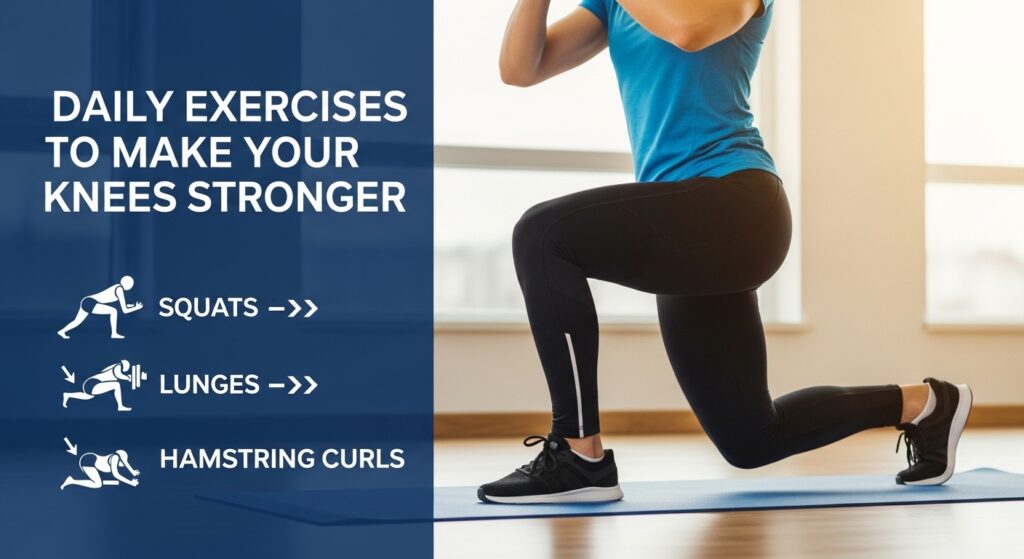
Having weak knees may make it uncomfortable to perform even the simplest of tasks, such as walking, climbing the stairs, or even standing for long periods of time. Your weak knees may have resulted from lack of exercise, old age, minor injuries, or even muscle imbalances. The good news is that with the right exercises, it is possible to strengthen your weak knees.
In this guide, you are going to learn the best exercises for strengthening weak knees, how to do these exercises, and how to care for your weak knees while strengthening them.
Why Do Knees Become Weak?
Before we get into the best exercises for strengthening weak knees, it is important that we first look at why our knees become weak. The reasons that have been attributed to weak knees include:
- Weak quadriceps
- Tight hamstring muscles
- Weak glutes
- Lack of exercises
- Poor posture
- Minor injuries
As we mentioned earlier, your knees rely heavily on the muscles that are surrounding them. Therefore, it is important that these muscles are strengthened so that they can reduce the pressure that is experienced in the knees.
Benefits of Strengthening Weak Knees
The best exercises for strengthening weak knees can benefit one in several ways. These benefits include:
- Reduction of pain in the knees
- Improvement in stability
- Prevention of injuries
- Improvement in balance
- Improvement in mobility
Best Exercises to Strengthen Weak Knees
The exercises that are discussed below are safe and require little equipment. Therefore, they are important for any beginner. These exercises can be done at home.
1. Straight Leg Raises
This exercise targets the quadriceps without any pressure on the knee.
How to Do It
- Lie on your back with one knee straight and the other bent
- Contract your thigh muscles
- Lift your straight leg up to the level of your bent knee
- Stay in that position for 3 to 5 seconds
- Slowly return to the starting position
Reps: 10 to 15 reps on each leg.
2. Wall Sit
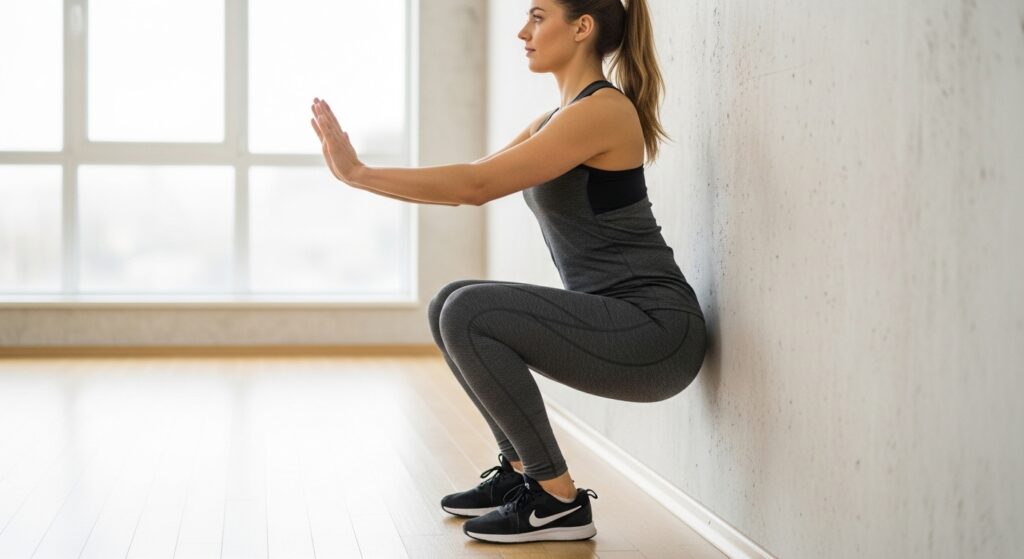
Wall sit exercises target the quads, hamstrings, and glutes.
How to Do It
- Stand with your back against a wall
- Slowly slide down to a sitting position
- Keep your legs at 90 degrees or slightly below
- Stay in that position for 15 to 30 seconds
Tip: If you experience pain at 90 degrees, you may sit slightly higher.
3. Step-Ups
Step-ups help in developing balance and knee stability.
How to Do It
- You will need a low step or a stair
- Step up using one of your feet
- Bring up the second foot
- Slowly step down
- Reps: 10 reps per leg
Beginners should use a low step to avoid straining their knee.
4. Hamstring Curls
Having strong hamstring muscles will help stabilize the knee.
How to Do It
- You will need a chair
- Stand while holding the chair
- Bend one of your legs, bringing your heel towards your buttocks
- Hold the position for 3 seconds
- Slowly come back to the normal position
Reps: 12 to 15 reps per leg.
5. Calf Raises
Calf muscles will help stabilize your legs and reduce knee stress.
How to Do It
- Stand up straight
- Lift your heels off the ground
- Hold the position for 2 seconds
- Slowly come back to the normal position
Reps: 15 reps.
6. Glute Bridges
Having strong glutes helps to greatly reduce pressure on your knees.
How to do it
- Lie on your back with your knees bent
- Lift your hips towards the ceiling
- Squeeze your glutes
- Lower your hips
Reps: 12 to 15 reps.
7. Side Leg Raises
This exercise helps to build strong hip muscles that support your knee.
How to do it
- Lie on your side
- Slowly raise your leg
- Hold your leg
- Slowly lower your leg
Reps: 12 reps.
Weekly Routine for Weak Knees
You can follow this routin:
- Perform these exercises 3 to 4 times a week
- Perform 2 to 3 sets
- Rest for 30 to 60 seconds
Consistency is key, not intensity.
Safety Tips for Knee Strengthening

In order to avoid injuries:
- Warm up before exercising for 5 minutes
- Avoid deep squatting if it is painful
- Move slowly and control your movement
- Stop immediately if sharp pain is felt
- Wear shoes that support your knee
- Gradually increase repetitions
If swelling or sharp pain is experienced, it is best to see a doctor.
When to See a Doctor
Exercise is good for people with mild weakness. However, if there is:
- Persistent swelling
- A clicking or locking sensation
- Severe instability
- Sudden sharp pain
It is best to see a doctor because it could be a problem with the ligaments or cartilages.
Common Mistakes to Avoid When Strengthening Weak Knees
In this section, you may discuss the following common mistakes to avoid when strengthening
- weak knees
- Performing deep squats too early
- Exercising without proper warm-up
- Not focusing on strengthening the hips and glutes
- Moving too fast instead of moving in a controlled manner
- Pushing through sharp pain
Best Lifestyle Tips to Support Knee Strength and Joint Health
In this section, the following tips may be included:
- Maintaining a healthy weight
- Wearing supportive shoes
- Engaging in daily physical activity
- Consuming foods that are friendly to the joints
- Stretching regularly
How Long Does It Take to Strengthen Weak Knees?
In this section of the text, you could write about:
- The realistic time frame for strengthening weak knees is 4-8 weeks of consistent exercise
- The significance of gradual progress in strengthening weak knees
- The impact of exercise frequency in strengthening weak knees
- The signs that indicate your knees are getting stronger
When to Stop Exercising and Seek Medical Advice
In this section of the text, you could write about:
- Warning signs—swelling and sharp pain in the knees
- Knees locking and instability
- Having a history of ligament injuries
Final Thoughts
It is quite possible for weak knees to get stronger through simple exercises. By focusing on the quadriceps, hamstrings, glutes, and calf muscles, you are able to improve the stability of the knees and eliminate the discomfort. As you begin the exercise slowly and consistently, you are able to improve the condition of the knees so that they become strong and stable.