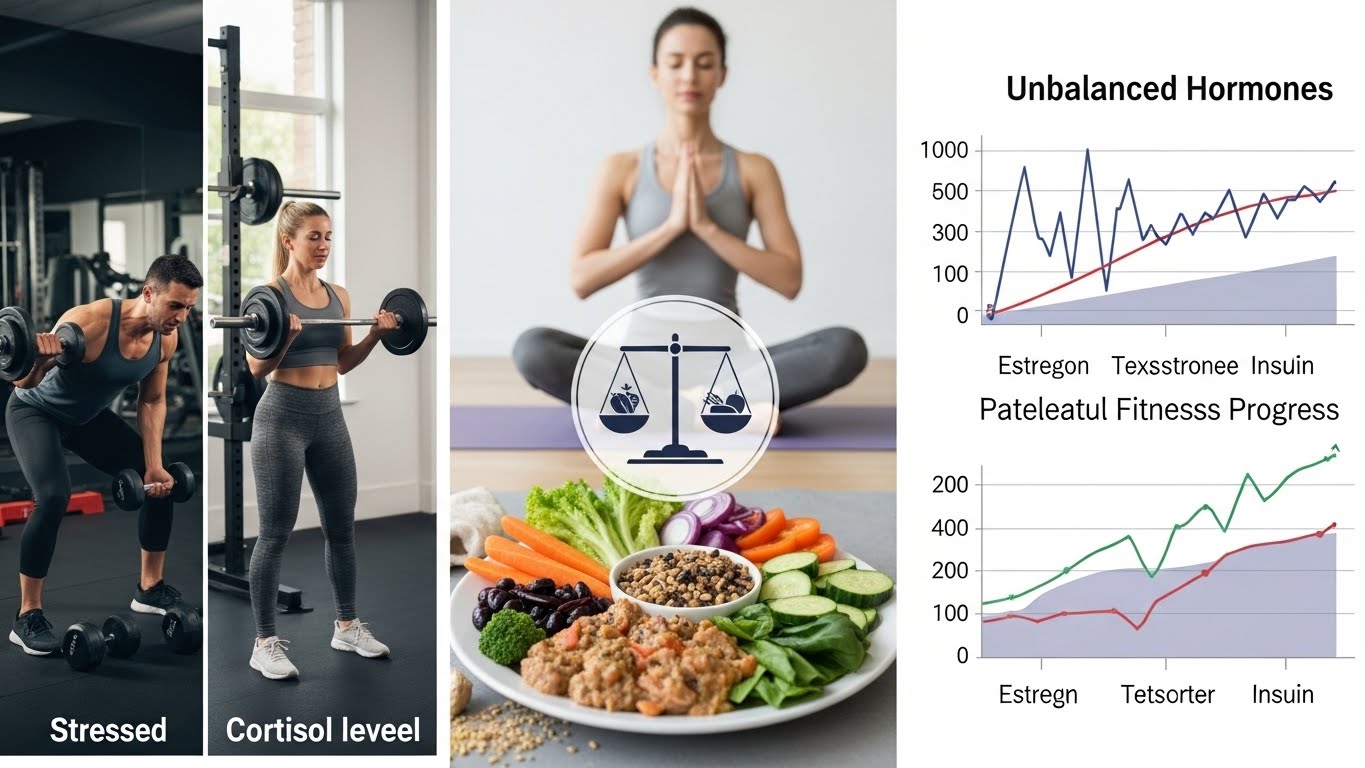
Hormonal Balance – The role of hormones within fitness training and health is extremely essential. The main concern of training regimens as well as diets tends to be at an overt level, whereas the regulation of training by hormonal influences within the body tends to remain hidden. The functions that range from muscle building to endurance are all dependent on hormonal regulation within the body.
To be able to train smarter, recover faster, and gain optimal long-term results, you should comprehend how hormones affect fitness and exercise.What Are Hormones and Why Are They Important?
Hormones are chemical messengers of the endocrine system, which are produced by different kinds of glands. They circulate in the bloodstream and regulate vital processes, including metabolic rate, growth, mood, energy levels, and muscle repair.
When hormones are in balance, the body functions with ease. Disrupted, this balance sends progress slowing while fatigue rises and so does the risk for injury. Fitness performance relies highly on the functionalities of healthy hormonal function.
Testosterone and Muscle Strength
Testosterone is one of the most critical hormones involved in building and recovering muscle mass and strength. It stimulates protein synthesis, which is crucial for muscle buildup and repair.
Optimum levels of testosterone correlate with:
- Adding Muscle Mass
- Increased strength & power
- Recovering quicker
- Improved motivation and concentration
All of the following activities come naturally and increase the production of testosterone: weight training, getting adequate restGrowth Hormone and Recovery
Growth hormone helps to promote repair in tissues, regulate fat, and aid in muscle recovery. This hormone is mainly secreted by the body during deep sleep and physical exercise.
Higher levels of growth hormone promote:
- Muscle repair & regeneration
- Fat burning
- Enhanced Recovery
- Better connective tissues
Both quality sleep and high-intensity exercise are crucial for optimal levels of growth hormones.Insulin and Energy Regulation
Insulin is known to facilitate the entry of glucose into cells to provide energy or for storage. Its role in relation to sport performance is of high significance.
Healthy insulin function maintains:
- Unchanging energy levels
- Muscle Glycogen Replen
- Decreased fat storage
- Speeding Up Post-Exercise Recovery
A balanced meal consisting of protein, fibers, and healthy fat makes the body more sensitive to insulin and metabolically healthy.
Cortisol: The Stress Hormone
Cortisol is released during physical and mental stress. Although short-term cortisol is beneficial for energizing and performing, high levels can inhibit fitness progress.
Higher levels of cortisol are associated with:
- Muscle breakdown
- Fat deposit
- Sleep disturbances
- Impaired Immune Function
Stress management, ensuring proper recovery, as well as avoiding overtraining, can ensure that cortisol levels remain under control.Hydration and Its Effect on Hormonal Balance
Hydration is a significant yet often undervalued aspect of endocrine function and physical fitness. Hydration is essential for the proper distribution of hormones within the body via the bloodstream to facilitate metabolism. Even slight dehydration can cause cortisol levels to rise, physical performance to decline, and concentration to dwindle during physical activities.
- Hydrating appropriately helps with
- Regulate cortisol levels
- Promote efficient nutrient and hormone transport
- Enhance exercise performance and exercise endurance
- Promote recovery and muscle function
Research has also found that staying hydrated is an effective way to promote body temperature regulation and relieve bodily stress, ensuring that hormonal functions work even better. Hydrating with water on a daily basis is an effective and positive habit for both hormonal and fitness functions.Estrogen and Fitness Performance
Estrogen is very significant for muscles, joint maintenance, as well as bone health, particularly for women. In addition, it hasfunctions related to energy and endurance.
“Healthy levels of estrogen help to:
- Strong bones
- Enhanced muscle repair
- Lower injury risk
- Improved endurance performance
A balanced diet, regular exercise, and stress management can ensure that there is a balance of the estrogen hormone.Thyroid Hormones and Metabolism
Thyroid hormones are the main regulators of metabolism and energy production. They influence how well the body transforms nutrients into usable energy.
Balanced thyroid function supports the following:
- Healthy metabolism
- Consistent energy levels
- Weight management
- Exercise tolerance
Poor nutrition, excessive dieting, and chronic stress all may weaken the thyroid.Hormonal Response to Exercise
Exercise has a direct effect on the level of hormone production. Various forms of training yield different responses in terms of hormones.
For instance:
- Strength training increases testosterone and growth hormone
- High-intensity exercises increase insulin sensitivity
- Moderate cardio helps balance cortisol levels
This is why diverse training programs are more effective than constant routine training.Overtraining and Hormonal Imbalance
Overtraining usually happens if the body is not provided with adequate time for recuperation between exercise sessions. This may affect hormone levels and may result in poor performance as well as health problems.
Reactions that may point out hormonal imbalance brought on by overtraining are the following
- Persistent fatigue
- Loss of muscle strength
- Mood changes
- Poor sleep habits
Rest and recovery methods are also necessary for hormone regulation.Nutrition’s Role in Hormonal Balance
Nutrition affects hormone synthesis and secretion directly. Inadequate calories and nutrient deficiencies can disrupt hormonal balance.
Nutrients that support hormones include the following:
- Adequate intake of proteins
- Healthy fats for hormone synthesis
- Balancing carbohydrates for energy
- Micronutrients include zinc and magnesium
Eating consistently supports stable energy and performance.Sleep and Hormone Regulation
Sleep is another highly influential aspect regarding hormone balance.Levels of growth hormone, testosterone, and cortisol are all altered by sleep habits.
Poor sleep is damaging to healing, strength, and motivation. A basic requirement for people is that they need to sleep for 7-9 hours per day for optimal fitness performance.Age, Hormones, and Fitness
The levels of these hormones change normally with age, but exercise helps slow this process. To increase strength, training, proper eating, and rest are necessary for optimal performance.
Fitness performance is not age-related—it is facilitated by intelligent, hormone-friendly behaviors.
Hormone Support – Natural Methods
You can support hormonal balance by:
This will follow a properly balanced training plan.
- Prioritizing sleep and recovery
- The consumption of nutrient-rich foods
- Manage stress effectively
- Staying consistent, not extreme
This helps a person be in an environment where the hormones support fitness rather than act as its limitation.Conclusion
“Hormones are the ‘invisible’ engines of fitness performance. They shape how your body optimizes muscle growth, fat loss, recovery, and training adaptation,” Wilson-Pauwels says. “By understanding this vital role and using exercise, nutrition, and recovery strategies to support hormones, you will maximize performance and overall health,” Wilson-Pauwels explains.
A balanced hormonal system enables your fitness efforts to produce optimal results. Training smarter, not necessarily harder, begins with an understanding and respect for your body’s hormonal requirements.
1 thought on “Hormonal Balance a its Impact on Fitness Results”