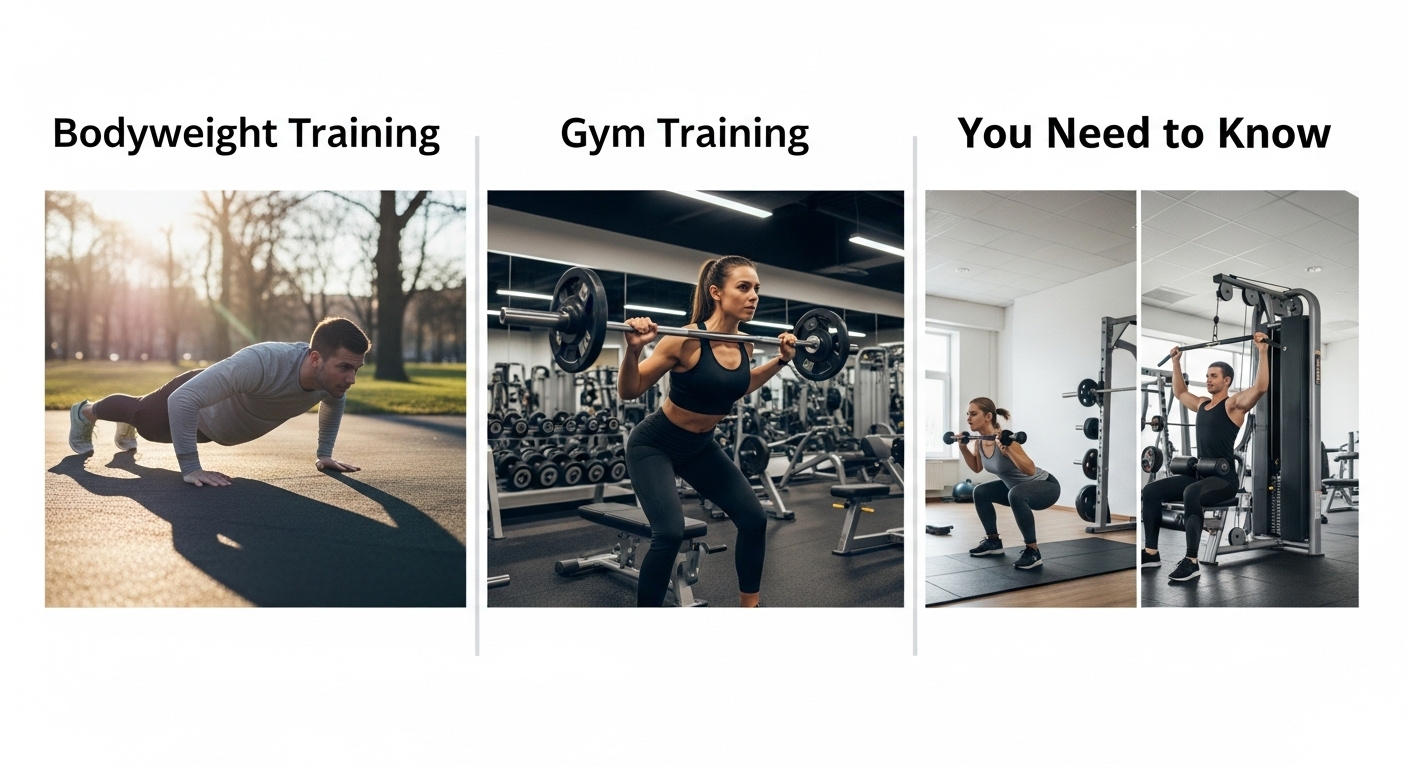
Bodyweight training and gym workouts are two of the most popular approaches to physical fitness. Both methods effectively build strength while they enhance endurance and promote general health advantages. The two systems require different equipment and they use different training methods and their accessibility and long-term use possibilities show different results. People can select their best workout method after they comprehend how bodyweight training and gym workouts differ from each other.
The article delivers a complete analysis that compares bodyweight training and gym workouts. The analysis includes their respective advantages and disadvantages and their actual implementation requirements.
What Is Bodyweight Training
Bodyweight training uses an individual’s own body mass as resistance. Body weight exercises require users to use their body weight as the only form of resistance because these exercises depend on their body position and the forces of gravity.
Common bodyweight exercises include push-ups, squats, lunges, planks, pull-ups, dips, and burpees. The movements can be done anywhere because they do not need any specific equipment.
Bodyweight training focuses on developing functional movement skills together with coordination skills, balance skills, and muscular endurance abilities.
What Are Gym Workouts
Gym workouts require multiple types of equipment which include free weights and resistance machines and cables and cardio machines. The design of gyms provides athletes with organized spaces that enable them to practice strength training and cardiovascular conditioning and flexibility exercises.
Gym workouts enable users to select specific resistance levels and their preferred exercises. The method serves three purposes which include muscle hypertrophy and strength development and muscle training for specific muscles.
Accessibility and Convenience
Bodyweight training is highly accessible. It needs only a small area because it does not need any equipment or membership fees to practice. People can exercise at home or in outdoor spaces or during their travels.
People need to have either gym access or their own workout equipment to complete their gym workouts. People may find it difficult to maintain their workout routine because of factors such as their gym distance and membership costs and their available workout times.
Bodyweight training provides better convenience to people who need to work out in less time and with less available equipment.
Equipment Requirements
Bodyweight training does not need any external equipment but users can choose to use pull-up bars or resistance bands as optional tools to create different workout experiences.
Gym workouts depend on equipment availability. The combination of free weights and machines and specialized tools provides users with multiple exercise options which they can use at different training intensities.
The two training methods differ primarily through their equipment accessibility.
Strength Development
Gym workouts provide a clear advantage for maximal strength development. The use of adjustable weights helps athletes to reach their progressive overload targets. Deadlifts squats and bench presses enable athletes to increase their training resistance in specific increments.
Bodyweight training develops relative strength and muscular endurance. Progression occurs when athletes use different exercise variations and increase their repetitions while controlling their tempo and performing unilateral exercises.
Bodyweight training helps people to build strength but gym workouts enable stronger strength development through their better training methods.
Muscle Hypertrophy
Muscle hypertrophy requires both resistance training and volume training. Gym workouts provide optimal conditions for muscle hypertrophy because they allow users to adjust weights and perform isolation exercises.
Bodyweight training enables beginners to grow their muscles but advanced practitioners require extra resistance for effective hypertrophy.
Training equipment enables users to focus on specific muscles while maintaining precise control over their training intensity.
Functional Fitness
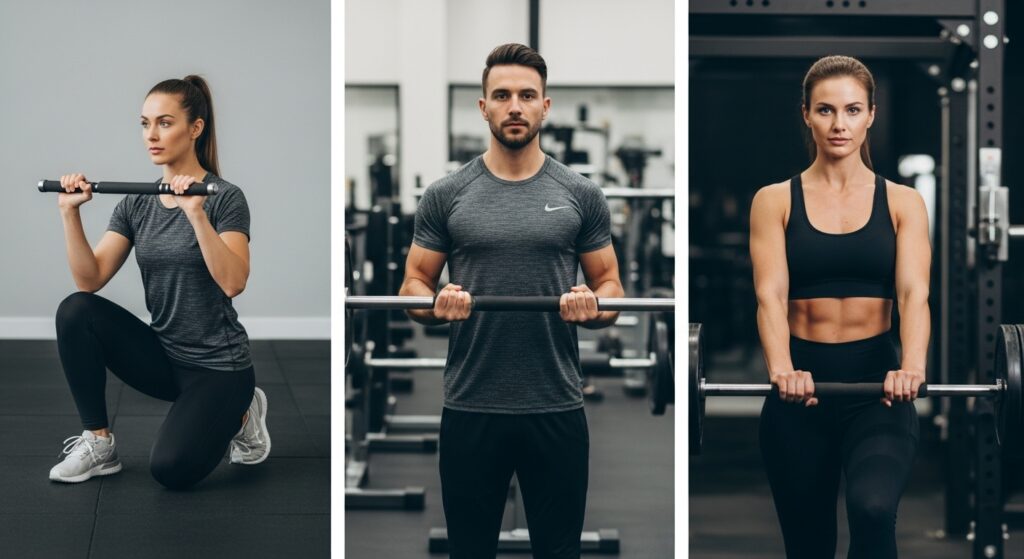
Bodyweight training focuses on teaching people the movement patterns that they will use in their daily activities. The exercises require participants to use multiple muscle groups while maintaining their balance and coordination abilities.
Functional fitness helps people to move better and maintain better posture and joint stability. Bodyweight exercises appear in both athletic training programs and rehabilitation exercises.
Compound exercises in gym workouts create functional fitness benefits which can enhance athletic performance.
Cardiovascular Conditioning
Bodyweight training develops cardiovascular fitness when people do the exercises at high-intensity during circuit training. The exercises of jumping jacks and mountain climbers and burpees lead to higher heart rates and improved endurance.
People who go to the gym can choose from various cardiovascular exercise options which include treadmills and stationary bikes and rowing machines and ellipticals.
The two training methods achieve cardiovascular fitness improvements through their different training approaches and training intensities.
Joint Impact and Injury Risk
Bodyweight training becomes safer for joints when people execute their exercises with correct technique according to the American Council on Exercise. The body moves according to its natural range of motion.
People who go to the gym face higher chances of sustaining injuries when they use improper techniques and lift excessive weights. The use of machines provides users with joint protection while they execute their exercises through predefined movement patterns.
The way a person trains determines their injury risk more than their training methods.
Flexibility and Mobility
Bodyweight training trains people to execute movements which develop their flexibility and mobility skills. The exercises of lunges and squats and planks let people move their joints.
Gym workouts require gym users to complete extra flexibility exercises so they can preserve their ability to move freely while lifting heavy weights.
Both approaches benefit from incorporating stretching and mobility work.
Cost Considerations
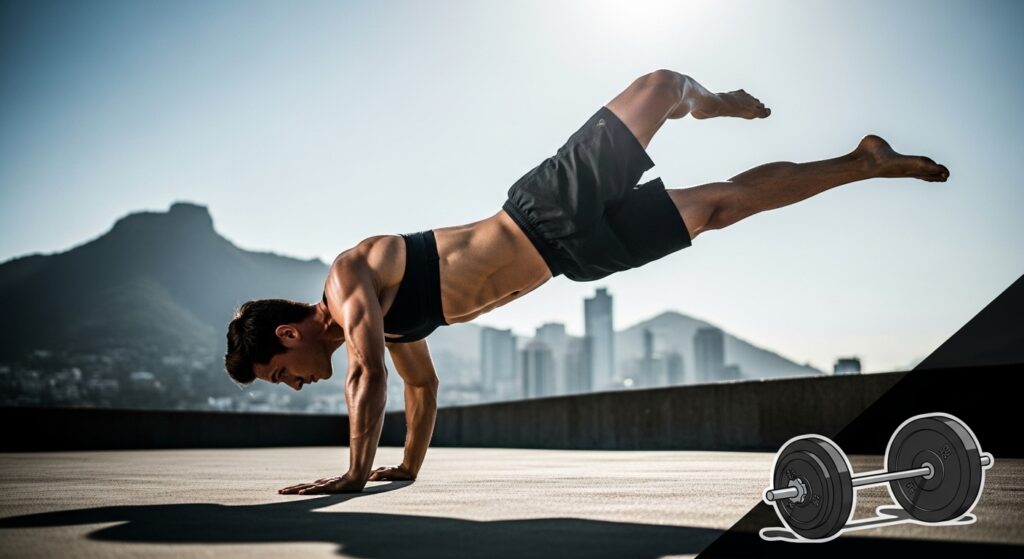
Bodyweight training provides a cost-efficient solution because it requires no expenses for gym memberships and no need to buy exercise equipment.
The expenses of gym workouts include membership fees and costs for transportation and any needed equipment. The expenses become acceptable to some people because they gain access to advanced equipment and professional training facilities.
People choose their training methods based on their available budget.
Training Variety
Gym workouts provide extensive exercise options through their machines and free weights and their class-based training system which enables users to select specific workouts. The diverse exercise options give users the ability to focus on their specific goals while making progress over time.
Bodyweight training uses exercise variations together with originality to create new workouts. The user can achieve better results through advanced training methods which increase workout intensity without using extra equipment.
Both methods provide training variety, but gym facilities provide more organized exercise options.
Adaptability for Fitness Levels
Bodyweight training provides a training method which beginners and experienced athletes can use. The difficulty level of exercises can be adjusted through the use of exercise modifications.
Gym workouts enable users to select their preferred workout intensity through weight adjustments and machine settings which allow them to create personalized workout experiences.
The two training methods offer users training options which match their fitness goals and support their long-term training progress.
Time Efficiency
Bodyweight workouts require only a brief workout time because they need very little equipment to be set up. Short high-intensity workouts create effective methods which help people sustain their physical fitness level.
The gym workout process needs extra time because users must travel and set up their equipment while waiting for their next exercise session.
People choose between bodyweight training and gym workouts based on their available time for exercise.
The training zone exists as the main area for conducting research work. Bodyweight training enables performers to exercise anywhere they choose to train. Outdoor exercise sessions help users discover new workout methods while decreasing their dependence on training facilities.
The gym provides a training space where users can access specific tools and receive guidance from trained professionals.
The gym provides users with a controlled space that contains specific equipment and professional support staff.
Training Environment
People select their preferred training space based on their personal tastes.
The body of the text shows that people build fitness through ongoing exercise because their bodyweight workouts establish basic training patterns which they can practice at any time through their bodyweight workouts.
Bodyweight training provides sustainable exercise patterns because people need no special equipment to practice basic exercises through bodyweight training.
Gym workouts support structured progression and advanced training goals but may be affected by schedule and cost.
Long-Term Sustainability
The ability to maintain a practice depends on two factors which determine whether users will sustain their practice.
People who need strength and flexibility training can achieve better results through bodyweight exercises and gym sessions.
Hybrid training programs allow functional movement training alongside strength progression.
Combining Both Methods
The user can use bodyweight exercises to prepare for training because they need warm-up exercises and mobility training and conditioning work while using gym exercises to build strength and muscle size.
The two methods create an optimal system which delivers the best results to users.
Who Should Choose Bodyweight Training
Bodyweight training is appropriate for beginners who want to exercise without equipment while traveling and for people who need to build functional fitness skills.
The program helps people prevent injuries while they work on their mobility and general fitness abilities.
Who Should Choose Gym Workouts
Gym workouts are suitable for individuals who want to increase their muscle size and develop their maximum strength through organized workout programs.
The exercises help athletes and people who want to develop specific muscle groups to improve their performance.
Conclusion
Bodyweight training and gym workouts both provide effective methods to achieve physical fitness. Bodyweight training provides accessible strength training because it focuses on functional movements which people can practice anywhere. Gym workouts enable users to develop strength through dedicated muscle training sessions.
https://shaintool.com/how-to-prevent-workout-injuries-naturally/
The choice between bodyweight training and gym workouts requires people to assess their training objectives and available resources and personal exercise preferences. Most people achieve their fitness goals through a combined approach which offers long-term sustainable results.