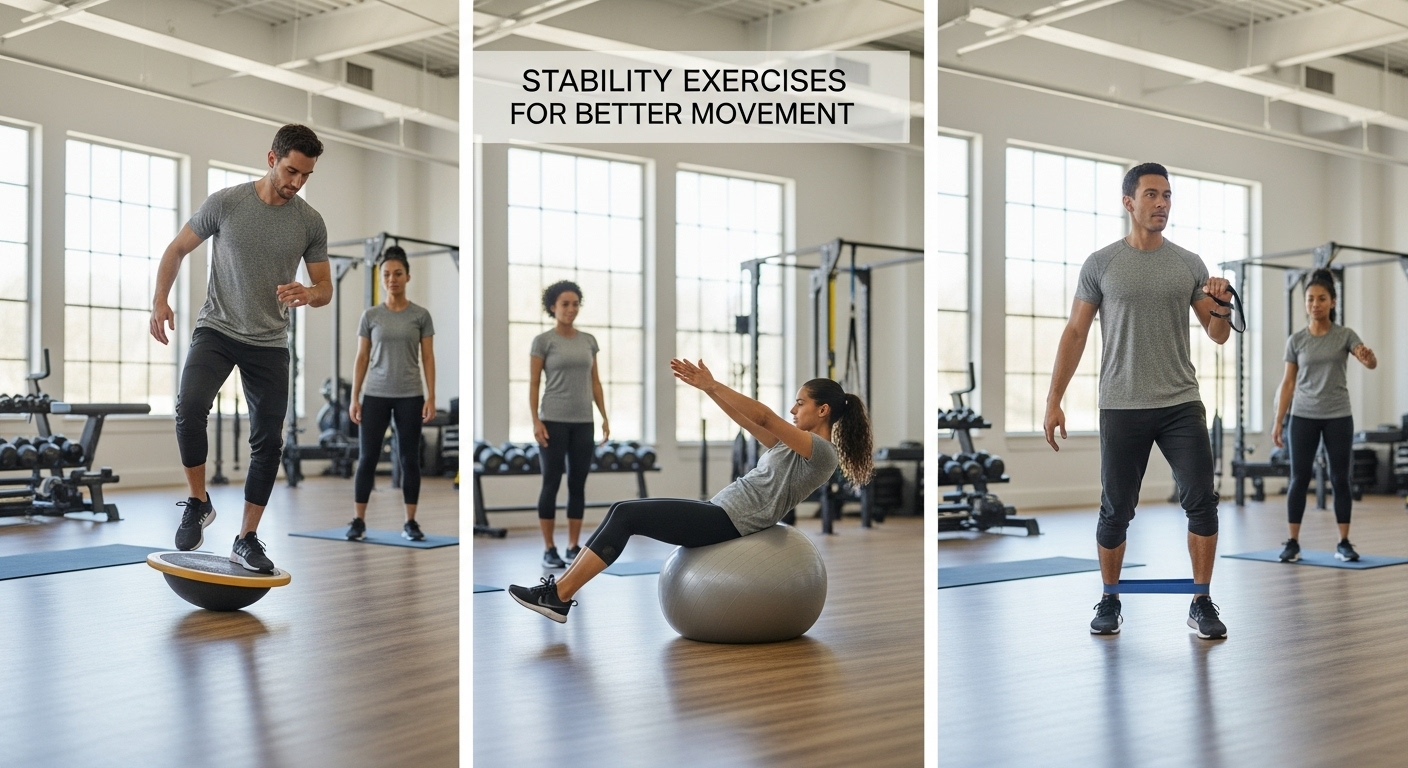
Physical fitness needs balance together with stability as fundamental components. The two aspects serve essential functions because they influence movement abilities and athletic performance and body alignment and injury protection methods. The inability to maintain balance leads to falls which also result from improper body movement and joint and muscle overexertion. People who practice balance and stability exercises will experience enhanced coordination and strength development and improved functional fitness abilities.
The article explores the importance of balance and stability together with the most effective exercises to enhance these abilities.
Understanding Balance and Stability
Balance enables a person to maintain their body weight within their designated area of support. The ability to stabilize control body movements while maintaining proper body alignment during both stationary and active situations defines stability.
People maintain their balance through the coordinated functioning between their muscles and joints and their nervous system and their visual and inner ear sensory systems. The ability to maintain balance gets affected by muscular weakness and improper posture and restricted physical capabilities and poor body coordination.
Practicing balance and stability skills helps people develop body awareness and movement control and develop their physical strength.
Importance of Balance and Stability
Balance and stability are important for everyday living, including walking, standing, bending, and lifting. They also enhance sports performance and physical training.
Important Outcomes
- Prevention of falls and injuries
- Improved posture and efficiency of movement
- Increased joint control and muscle coordination
- Improved core strength and spinal support
- Boosted confidence during physical activity
Balance training is very valuable for all ages, from beginners to seniors.
Key Muscle Groups Involved
Balance and stability require the engagement of multiple muscle groups simultaneously.
The muscles of the core provide stabilization to the spine and the trunk. The lower body muscles, such as the glutes, quadriceps, hamstrings, and calf muscles, form a stable base. Smaller stabilizer muscles around the hips, knees, and ankles help to position joints properly.
Engaging these muscle groups helps to improve balance and movement functions.
Standing on One Leg
Standing on one leg is a basic balance exercise.
This exercise helps to stabilize the ankles, knees, and hips. It also helps to improve core activation and posture.
To do the exercise, stand on one leg, balancing yourself. Maintain the pose for an interval before switching legs.
Standing while keeping your eyes closed or standing on an unstable surface are variations.
Heel-to-Toe Walk
The heel-to-toe walk is an exercise that helps to improve balance and coordination during movement.
This exercise tests the body’s stability functions while walking in a straight line. It helps to strengthen stabilizer muscles in the legs.
The exercise involves walking in a straight line by placing the heel of one foot directly in front of the toes of the other foot.
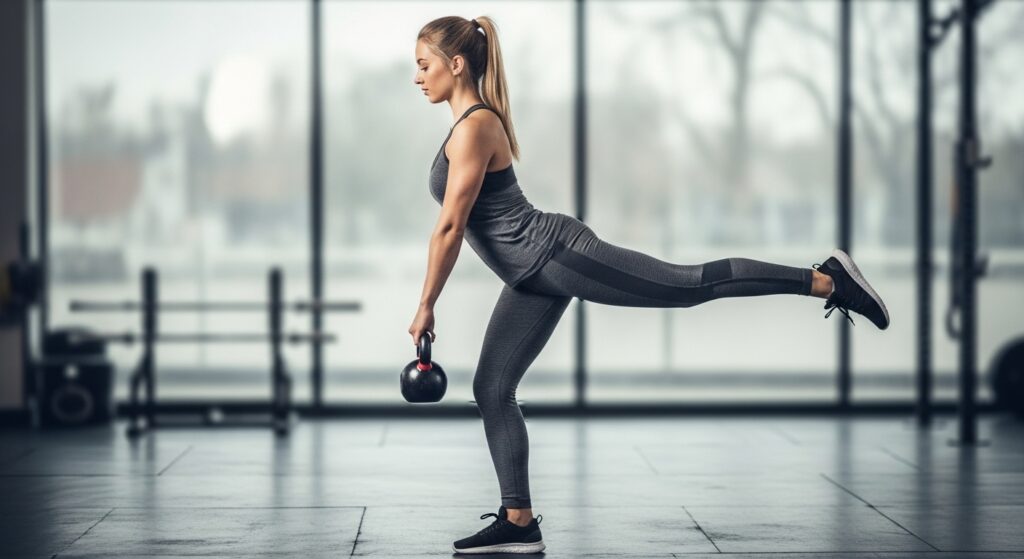
Single-Leg Squats
Single-leg squats enhance strength and stability in the lower limbs.
This exercise is specific to the glutes, quadriceps, and core muscles. It also enhances knee positioning and balance.
The exercise should be done slowly and with correct posture to prevent joint injuries. Single-leg squats can also be done with reduced depth or with support.
Lunges
Lunges are beneficial in enhancing dynamic balance and stability.
This exercise strengthens the lower limbs while balancing during forward and backward movements. Lunges also enhance coordination between the hips, knees, and ankles.
Careful movement and correct posture are vital in balancing during lunges.
Step-Ups
Step-ups improve three physical attributes which include balance and strength and functional ability.
The exercise leads to better strength development because it matches the physical demands of stair climbing. The exercise of step-ups develops leg strength while it improves the ability to balance on one leg.
The execution of step-ups requires practitioners to perform their movements with controlled speed on a solid surface to maintain correct joint alignment.
Plank Exercise
Core stability training benefits from plank exercises which enhance core control.
The core functions as a vital body component which maintains body equilibrium by controlling spinal and pelvic stability. Plank exercises develop strength in abdominal muscles and back muscles and shoulder muscles.
Athletes need proper body alignment during plank exercises because it helps them achieve maximum stability training results.
Side Plank
Side plank exercises help to target the muscles of the lateral core and hip regions.
The muscles are significant for regulating side-to-side movement and balance during walking and standing activities.
The exercise helps to enhance the stability of the trunk and prevents injuries due to imbalance.
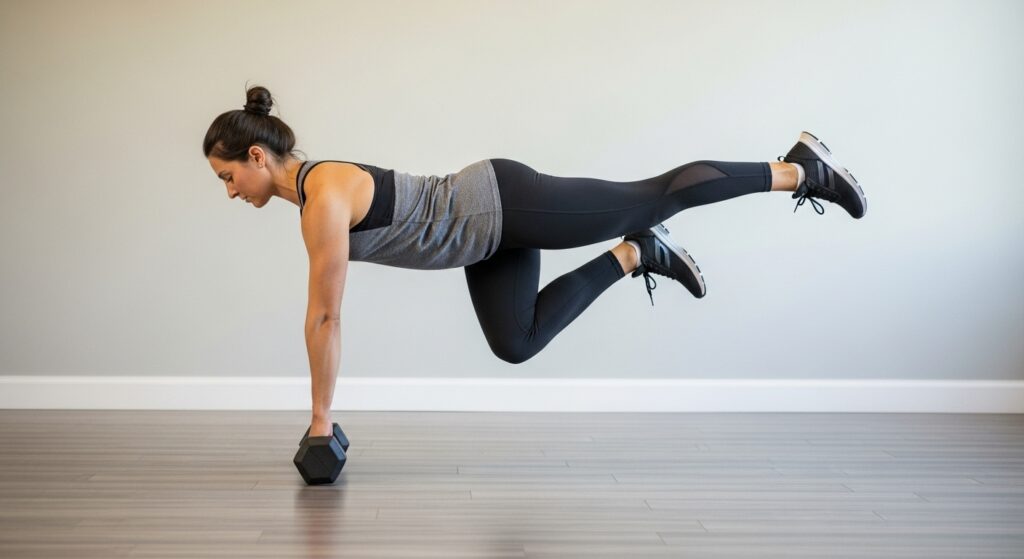
Bird Dog Exercise
The bird dog exercise helps to improve coordination and stability of the spinal region.
The exercise requires the practitioner to maintain trunk stability while extending their opposite arm and leg. The exercise helps to target balance, posture, and neuromuscular function.
The exercise should be performed at a slow speed.
Stability Ball Exercises
Stability balls provide an unstable environment that tests balance and coordination.
Exercises like balance in a seated position, wall squats, and plank exercises on a stability ball target stabilizing muscles.
Training with a stability ball enhances balance and core muscle strength.
Balance Board Training
Balance boards provide an unstable environment that requires the activation of stabilizing muscles.
Training on a balance board enhances ankle stability and coordination. This type of exercise is popular in rehabilitation and sports training.
Balance board exercises must be done carefully and with support.
Yoga-Based Balance Exercises
Yoga provides exercises that improve balance and flexibility and body awareness.
The standing yoga positions require balance testing which results in muscle activation and body alignment development. Breathing exercises also improve balance and coordination.
Yoga-based balance training enhances joint flexibility.
Tai Chi Movements
Tai Chi combines slow precise movements which enhance balance and stability.
This exercise helps to develop better coordination and muscle control and balance. Tai Chi provides seniors with an effective method to enhance their balance abilities.
Regular practice establishes optimal movement patterns which work to stop falls from happening.
Ankle Strengthening Exercises
The process of ankle strengthening serves as an essential component to help people maintain their ability to balance.
The three exercises of calf raises ankle circles and resistance band exercises work together to build strength in ankle stabilizers.
The process of ankle strengthening leads to better balance control which reduces the risk of falls and lower body injuries.
Hip Stability Exercises
People need hip stability because it plays a crucial role in maintaining their ability to balance and preserve proper posture.
The glute bridge exercise combined with lateral leg lifts and hip abductions help to build strength in hip stabilizers.
Stronger hips enable better posture maintenance which stops people from developing compensatory movement patterns.
Achieve Balance Training Frequency
People should practice balance and stability exercises at regular intervals throughout their training schedule.
Training two to three times per week is very effective for improvement. People can practice balance exercises during their warm-up and cool-down periods.
People need to maintain training consistency because it directly affects their ability to develop neuromuscular adaptations.
Consistency is very important for neuromuscular adaptation.
Safety Considerations
Balance exercises should be done in a safe setting.
Support like a wall or a chair can be used during initial training. Proper footwear and surfaces can prevent injuries.
Progressions should be done gradually to prevent falls or muscle strains.
Who Should Train Balance
People of all fitness levels can benefit from balance and stability training exercises.
The exercises hold great significance for four specific groups of people: senior citizens, athletes, beginner exercisers and individuals who are recovering from their respective injuries. The people who experience joint instability or coordination difficulties require balance training.
The balance training program helps people achieve greater mobility which allows them to walk without assistance for longer durations.
Conclusion
Functional fitness requires balance and stability. The functional exercises of single-leg standing and lunges and planks and step-ups and stability exercises help users develop their balance and stability skills.
https://shaintool.com/how-warm-up-and-cool-down-help-you-move-better/
The regular practice of balance exercises helps people avoid injuries while improving their posture and movement abilities. The inclusion of balance and stability exercises in a fitness program will lead to enhancements in physical performance.
2 thoughts on “Stability Exercises for Better Movement”